
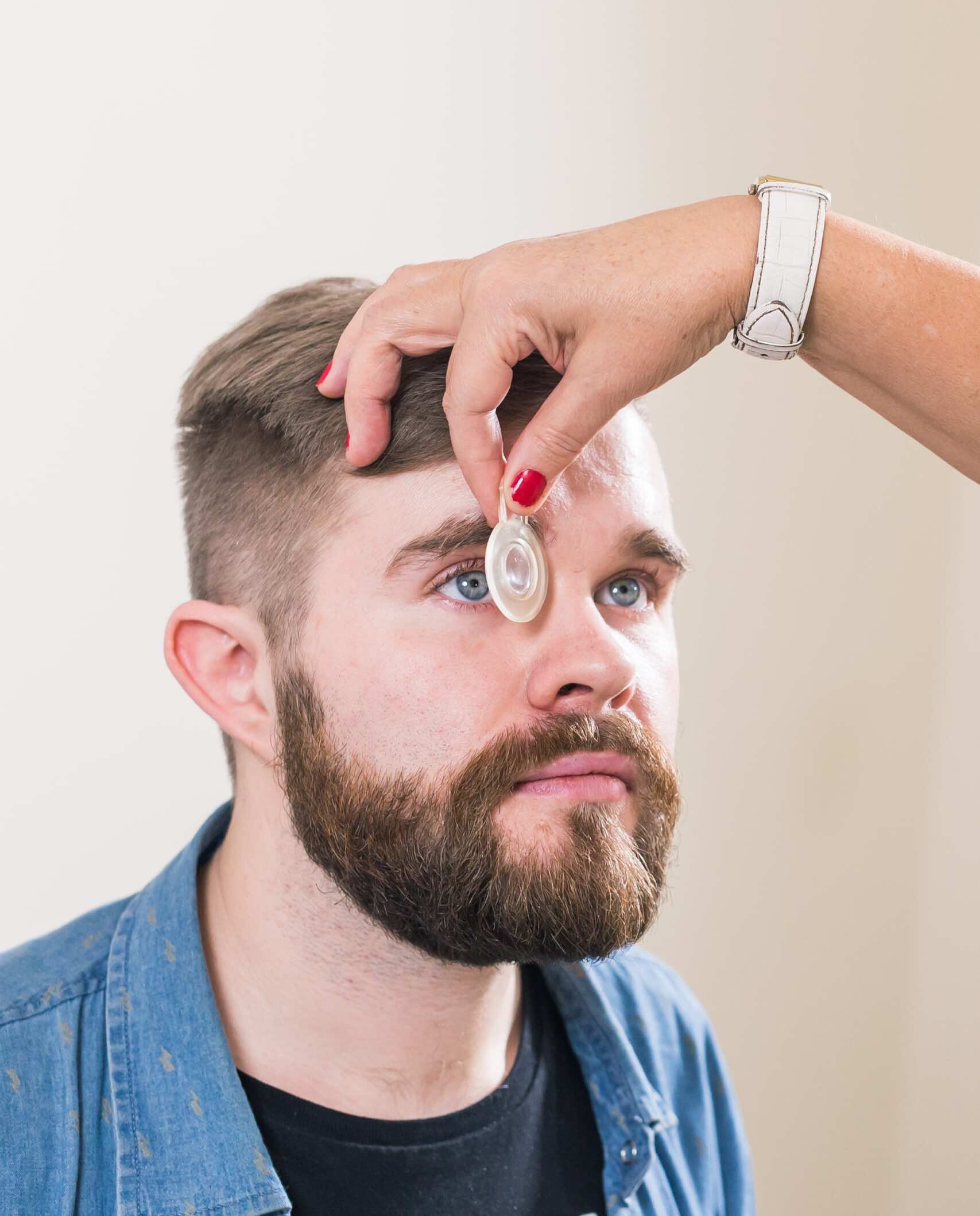
Eye surgery, whether it is cataract removal, IVOM therapy, or a laser procedure, involves a highly precise operation on a very delicate organ. The healing process truly begins after the surgery. Professional follow-up care after an eye operation serves several important purposes.
Infection prevention is achieved by properly using antibiotic eye drops and following hygiene rules, which greatly reduce the risk of infections. Every surgery triggers a natural inflammatory response. Special eye drops help manage this reaction to support optimal healing. During follow-up appointments, we monitor the healing process to ensure everything is progressing as expected, the new lens is correctly positioned, and the retina is properly attached. Early detection of rare complications such as increased eye pressure or retinal swelling allows for prompt treatment. We provide clear behavioral guidelines and answer all your questions so you feel safe and well informed after the operation.
The exact follow-up care after an eye surgery depends on the type of procedure performed. However, there is a general schedule to guide you.
Immediately after the surgery, you will receive a protective eye patch along with detailed instructions for the first few hours and the first night. You should not drive yourself.
On the first day after the operation, an important check-up takes place at our practice in Frankfurt. During this visit, the patch is removed and your visual acuity, eye pressure, lens position, and retina condition are examined. You will also receive thorough guidance on how to use your eye drops.
During the first week, your eye remains sensitive. Avoid physical exertion, rubbing your eye, and exposure to dust or dirt. Depending on the type of surgery, a further examination might be scheduled.
In the following weeks, your vision gradually stabilizes and the use of eye drops is gradually reduced. The final check-up usually occurs after 4 to 6 weeks. During this appointment, your final eyeglass prescription may also be determined.
Each procedure requires specific aftercare. The following table provides an overview of the key aspects for the most common surgeries we perform.
Eingriff | Typische Dauer der Heilung | Wichtige Verhaltensregeln in der Nachsorge | Nächste Kontrolle |
|---|---|---|---|
Katarakt-Operation | Die Sehschärfe verbessert sich schnell, die vollständige Stabilisierung dauert 4-6 Wochen. | Kein Druck oder Reiben am Auge, Schutzbrille nachts tragen, kein Schwimmbad/Sauna für ca. 2 Wochen. | Am ersten Tag nach der OP, dann nach ca. 1 Woche und 4-6 Wochen. |
IVOM (Augenspritze) | Kurze Erholungsphase von 1-2 Tagen, die Wirkung des Medikaments entfaltet sich über Wochen. | Kein Reiben, kein Kontakt mit Leitungswasser am Behandlungstag, verordnete Tropfen anwenden. | Je nach Behandlungsplan, meist nach 4-6 Wochen zur Erfolgskontrolle. |
Netzhautlaser | Meist nur geringe Beeinträchtigung, eventuell vorübergehende Blendung oder leichte Schmerzen. | Körperliche Schonung für einige Tage, insbesondere Vermeidung von Erschütterungen. | In der Regel nach 1-2 Wochen zur Kontrolle des Lasereffekts. |
Nachstar-Laser (YAG) | Die Sehverbesserung tritt meist innerhalb von Stunden ein. | In der Regel keine besonderen Einschränkungen, eventuell kurzzeitig entzündungshemmende Tropfen. | Meist nach ca. 1 Woche zur Druckkontrolle. |
Postoperative care after eye surgeries
Each procedure requires specific aftercare. The following summary outlines the key points for the most common operations we perform.
1. Cataract Surgery (Gray Cataract)
Healing time: Vision improves quickly, but full stabilization takes 4 to 6 weeks.
Guidelines: Avoid pressing or rubbing the eye. Wear a protective shield at night. Avoid swimming pools and saunas for about two weeks.
Follow-up appointments: The day after surgery, then approximately one week later, and again after 4 to 6 weeks.
2. IVOM (Intravitreal Eye Injection)
Healing time: Short recovery of 1 to 2 days, with medication effects developing over several weeks.
Guidelines: Do not rub the eye or expose it to tap water on the treatment day. Use prescribed eye drops as directed.
Follow-up appointments: Usually after 4 to 6 weeks, depending on the treatment plan, to monitor success.
3. Retinal Laser Treatment
Healing time: Usually minor discomfort with possible temporary glare or mild pain.
Guidelines: Rest physically for a few days and avoid activities causing jolts or vibrations.
Follow-up appointments: Typically 1 to 2 weeks later to check the laser effect.
4. Posterior Capsule Opacification Laser (YAG Capsulotomy)
Healing time: Vision improvement usually occurs within hours.
Guidelines: Generally no major restrictions. Anti-inflammatory drops might be prescribed for a short time.
Follow-up appointments: Usually about one week later to check eye pressure.
Successful postoperative care after an eye surgery requires teamwork. Your role is vital for a smooth and complication-free recovery.
Contact us immediately if you experience severe pain, sudden vision loss, redness, or see a shadow.
This is the most important step to prevent infections and reduce inflammation. We will guide you through the process clearly.
Avoid rubbing or pressing your eyes. When outside, wear sunglasses to protect them from wind, dust, and UV rays.
Before touching near your eye, for example when applying drops, wash your hands thoroughly.
Light activities and office work are usually possible again after just a few days. Depending on the surgery, you should avoid strenuous sports, swimming, and sauna visits for 2 to 4 weeks. Dr. Mareen Schmidt will provide you with specific recommendations for your individual post-operative care after the eye surgery.
A mild scratchy sensation or feeling of a foreign body during the first few days is normal and part of the healing process. However, if you experience severe, throbbing pain, increasing redness, or worsening vision, this is a warning sign. In such cases, contact us immediately for follow-up care after your eye surgery.
Don't panic. Avoid rinsing the eye forcefully. Gently pat it dry and apply your prescribed antibiotic eye drops. Keep an eye on the condition. If there is no severe redness or pain, usually nothing serious has happened. If in doubt, please call us. This question often arises during post-operative eye care.
To reduce the risk of infection, avoid using any eye makeup such as mascara, eyeshadow, or eyeliner for at least one to two weeks during the post-operative care phase. You will receive approval to resume once the eye is free of irritation and healing has progressed sufficiently.
Wash your hands thoroughly. Tilt your head slightly backward and gently pull down your lower eyelid. Place one drop into the pocket formed without touching the bottle tip. Then close your eye slowly and keep it closed for about one minute. Proper application is essential for aftercare following eye surgery.
After an eye surgery, watch for three main warning signs during follow-up care. First, severe and increasing pain. Second, a sudden and significant loss of vision. Third, intense and worsening redness of the eye. If you experience any of these symptoms, contact us immediately at any time, day or night.
The duration of eye drop therapy after eye surgery depends on the type of procedure. After cataract surgery, it usually lasts about four weeks with a gradual reduction in frequency. Following an IVOM injection, the therapy typically continues for only a few days. You will receive a detailed written schedule for your eye drops from us.
Even if you feel well, complications can develop unnoticed. Only a microscopic examination allows us to objectively assess the healing process, monitor eye pressure, and ensure everything is progressing properly. Attending your follow-up appointments is the most important thing you can do to ensure safe care after your eye surgery.



As your ophthalmologist in Frankfurt, Dr. med. Mareen Schmidt combines extensive clinical experience as a senior physician in the retina disease clinic with over 10,000 intraocular procedures, including IVOM, laser treatments, cataract surgeries, and vitreous body operations. She uses the latest diagnostic technology to provide top-level care. Her approach focuses on scientifically proven ophthalmology that prioritizes the patient. In her practice in Frankfurt’s Westend, Dr. Schmidt takes the time to deliver accurate diagnoses and offer personal, trustworthy consultations.
Dr. med. Mareen Schmidt has been awarded the BDOC quality seal. This certificate, developed by BDOC, recognizes skilled eye surgeons and is only given to experienced specialists in eye surgery.
Use advanced diagnostics and proven treatments to preserve your vision for life.
Build a trusting relationship with your doctor and carefully protect your eyesight.